
Why Does My Circuit Breaker
Keep Tripping?
A tripping breaker is protecting you from something. These are the 7 things that trigger it, how to tell them apart, and when to stop flipping it back on.
Quick Answer
A breaker trips for one of three common reasons: an overloaded circuit (too many watts on one breaker), a short circuit (a hot wire touching neutral or ground), or a ground fault (current leaking to ground, usually through water). Less common causes: an AFCI detecting arcing, a worn-out breaker, damaged wiring, or a loose connection at the breaker. If the same breaker trips on the same circuit more than twice, stop resetting it and call an electrician.
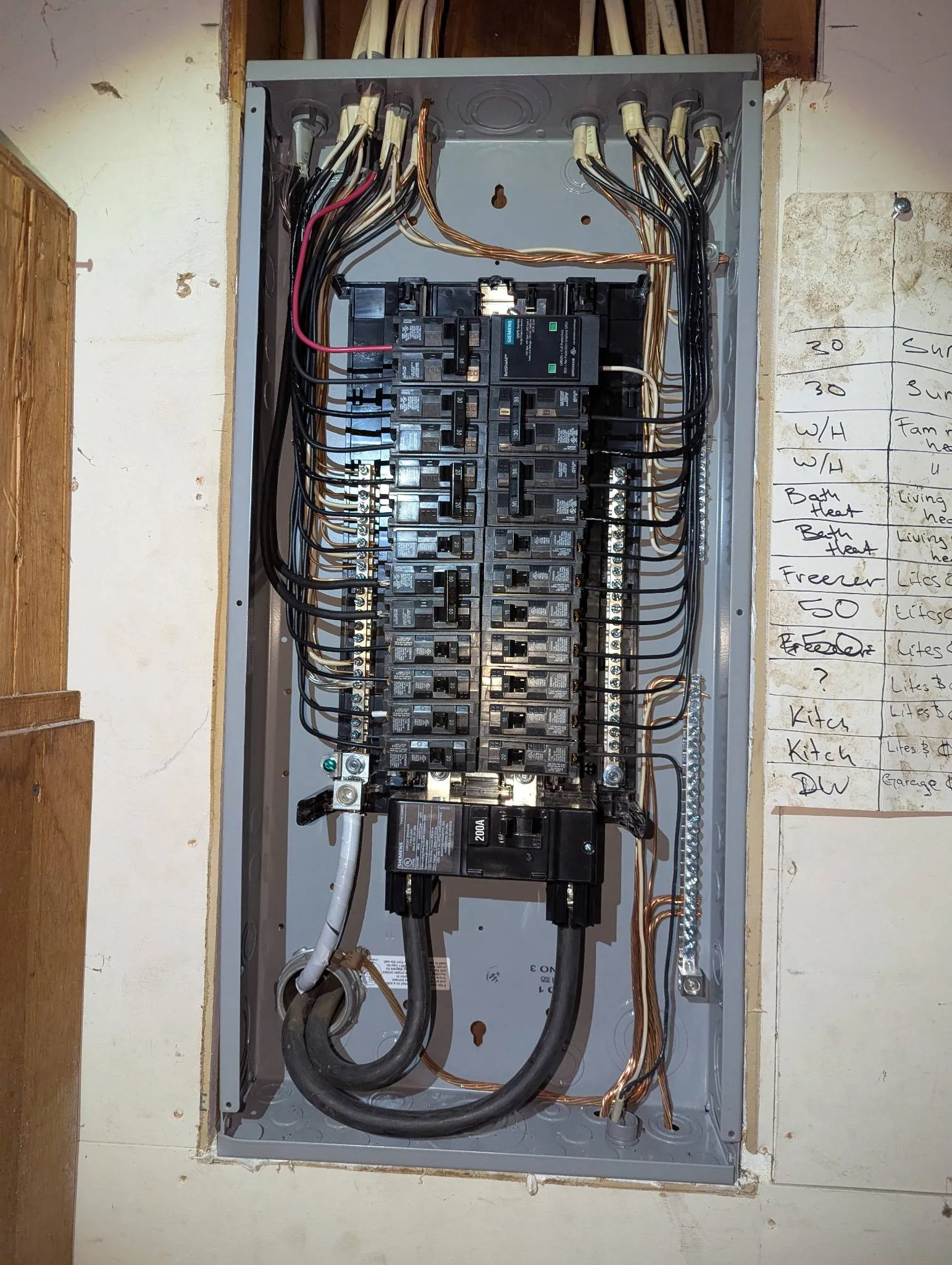
A breaker that keeps tripping is doing its job. That is the first thing to understand. The breaker sits in your panel watching for too much current on the wire behind it, and when it sees too much, it opens the circuit to stop it. If it keeps tripping, something on that circuit is drawing more current than the wire is rated for, or there is a fault pulling current somewhere it should not be going.
A tripping breaker is one of the most common calls Newman Electric takes across Vancouver WA. Most of the time it turns out to be a hairdryer and a space heater on the same bathroom circuit. Sometimes it's a failed breaker in an old panel. Every once in a while it's something burning behind a wall that has to be found before it causes real damage.
What a breaker actually does
A standard 15-amp breaker is rated to carry 15 amps of current without tripping. A 20-amp breaker carries 20 amps. When the current goes above that rating, the breaker's internal mechanism heats up or senses the overcurrent electromagnetically and snaps the circuit open. That interruption is the "trip."
There are also two specialty breakers you might have: a GFCI breaker watches for current leaking to ground (shock protection) and an AFCI breaker watches for electrical arcing (fire protection). Both are required in certain parts of the house by the 2023 NEC that Washington State adopted in April 2024. Both trip on conditions a standard breaker wouldn't.
The 7 causes of a tripping breaker
Overloaded circuit (most common)
Too many watts on one breaker. A 15-amp circuit handles about 1,800 watts. Plug in a 1,500W space heater, then turn on a 900W hairdryer on the same circuit, and you will trip it. The fix: move one device to a different circuit, or have an electrician add a dedicated circuit for the high-draw appliance.
Short circuit (hot wire touching neutral or ground)
A hot wire contacts a neutral or a grounded surface. Current rockets up, the breaker trips instantly, and often you will hear a pop or see a small arc. Damaged extension cords, chewed wires behind walls, and failing appliances are common culprits. A short that trips the breaker the moment you reset it needs an electrician.
Ground fault (current leaking to ground)
Current is escaping the intended path, usually through water or a wet appliance. This is what GFCI breakers and outlets catch. If your bathroom, kitchen, garage, or outdoor outlets have lost power, check for a tripped GFCI on the outlet itself before you head to the panel. Press "reset" on the GFCI and the power usually comes back.
Arc fault (AFCI breaker detecting arcing)
AFCI breakers listen for the electrical signature of arcing, which is a common cause of house fires. When they detect it, they trip. The arc might come from a nail in a wire, a damaged cord, or a loose connection in an outlet. AFCIs are required on most 15 and 20-amp circuits in living spaces under NEC 210.12. Nuisance trips happen, but a repeating AFCI trip is often a real problem.
Worn-out breaker
Breakers are mechanical devices. They wear out. An old breaker might trip at 12 amps when it should trip at 15, or fail to trip at all when it should. Federal Pacific Stab-Lok and Zinsco panels from the 60s through 80s are known for this. If your panel is old and a breaker started tripping out of nowhere with no load change, the breaker itself is a suspect.
Damaged or pinched wiring behind a wall
Someone hung a shelf and drove a screw through a Romex cable. A rodent chewed through insulation in the attic. An old staple cut into a wire. Damaged wiring can create intermittent shorts that cause random trips. These are the ones that take real diagnostic work to find, because the fault is not visible until you pull the wall back.
Loose connection at the breaker or an outlet
A loose wire on a breaker lug or at the back of an outlet creates heat and resistance. Over time that generates arcing, which trips AFCIs, and heat, which degrades the connection further. This is common on older back-stab outlets and on breakers that were never fully torqued. A licensed electrician can tighten the connections, replace the breaker if needed, and pull outlets to check the back-wire connections.
"I have to shout out Ryan for going out of his way to come save us tonight. After having an HVAC tech out two days in a row, I was really hoping to have AC restored in my home. What we thought was an HVAC issue turned out to be a breaker issue and we thought we were going to be sweating through the night once again. Newman Electric was the first place I called and I'm super glad I did. Ryan was probably on his way home for the day but diverted over to our house to help us out."
Craig Goldhamer, Google Review
How to diagnose a tripping breaker at home
Before you call anyone, you can do a few things safely that narrow down the problem. Follow these in order.
- Unplug everything on the circuit. Walk the rooms served by the tripped breaker and unplug all appliances, lamps, chargers, and cords. Turn off any hardwired fixtures at their switch.
- Reset the breaker. Push the handle firmly to OFF, then back to ON. If it stays on with nothing plugged in, the circuit itself is probably fine.
- Plug items back in one at a time. Start with lamps, then appliances. Whatever causes the trip is your load issue. If it trips when you plug in one specific thing, that appliance has a short or draws too much.
- Check for GFCI resets. If the circuit feeds bathrooms, kitchens, outdoors, or the garage, find every GFCI outlet in those areas and press "reset." One tripped GFCI can take down half the outlets in a circuit.
- Stop if it trips empty. If the breaker trips with nothing plugged in and no GFCI involved, the problem is in the wiring, the panel, or the breaker itself. Stop resetting it and call an electrician.
When to stop flipping it back on
Call an electrician immediately if any of these are true:
- The breaker trips the instant you reset it, with nothing plugged in.
- You smell burning plastic near the panel.
- The breaker or panel cover is warm to the touch.
- The breaker has tripped three or more times on the same circuit.
- You see discoloration or scorch marks on the breaker or around outlets on the circuit.
- The panel is a Federal Pacific Stab-Lok or Zinsco brand (both have known failure patterns).
Newman Electric handles these calls across Vancouver WA, Camas, Battle Ground, and the rest of Clark and Cowlitz County. We answer emergency calls 24/7 at 360-828-7143.
Frequently Asked Questions
Why does my circuit breaker keep tripping?
The three common causes are an overloaded circuit, a short circuit, and a ground fault. Less common ones include AFCI arcing, a worn-out breaker, damaged wiring, or a loose connection. If the same breaker trips repeatedly, one of these is active on that circuit.
Is it safe to keep flipping a breaker back on?
Once or twice to rule out a random trip is OK. Beyond that, you are forcing the wire to carry a load that triggered the breaker's protection. If a breaker trips three times on the same circuit, stop and call a licensed electrician.
How do I find out what is tripping my breaker?
Unplug everything on the circuit, reset the breaker, then plug things back in one at a time until it trips. That tells you whether it is an overload (found your culprit), a specific appliance with a short, or something in the wiring or breaker itself.
Do old breakers trip more often?
Yes. Springs weaken and contacts corrode over time. Federal Pacific Stab-Lok and Zinsco panels from the 60s, 70s, and 80s are particularly prone to nuisance trips and missed trips. If you have one of those panels in your Vancouver WA home, a panel upgrade is usually the right answer.
Can a tripping breaker cause a fire?
No, the trip is what prevents the fire. The conditions behind the trip, however, can start one if the breaker is defeated or keeps being reset. A breaker that fails to trip when it should (a common issue with Federal Pacific) is more dangerous than a breaker that trips often.
When should I call an electrician?
Call if the breaker trips with nothing plugged in, trips the instant you reset it, feels warm, shows discoloration, or has tripped three or more times. Also call if you smell burning near the panel. Newman Electric answers 24/7 at 360-828-7143.
Related Services
Electrical Repair
Diagnostic calls for tripping breakers and dead circuits
Electrical Panel Upgrade
Replace old panels and worn-out breakers with modern equipment
24/7 Emergency Electrical
Same-day response for breakers that won't reset
Electrical Safety Inspection
Full panel and circuit evaluation for older Vancouver WA homes
GFCI vs AFCI Outlets
What each one protects against and why yours may be tripping
Signs You Need a Panel Upgrade
Symptoms of an aging panel that can no longer keep up
Breaker still tripping?
Newman Electric diagnoses tripping breakers across Vancouver WA, Clark County, and Cowlitz County. Our crew finds the cause, fixes what's wrong, and tells you straight whether a panel upgrade is the real answer. Estimates are free.