
Heat Pump and Mini-Split
Electrical Requirements
The electrical side of a heat pump install is usually the thing that trips homeowners up. Here is the circuit size, disconnect rules, panel capacity, and what a real install actually involves in Vancouver, WA.
Quick Answer
Every heat pump needs a 240V dedicated circuit sized to the unit's MCA/MOP rating (usually 30-60 amps), a weatherproof disconnect within sight of the outdoor unit (NEC 440.14), and enough panel capacity to carry the load. Mini-splits run on one 240V circuit to the outdoor condenser. Central heat pumps need a second circuit for the indoor air handler, plus a high-amp circuit if electric heat strips are included.
Washington State is pushing hard on electrification, and Clark Public Utilities rebates have made heat pumps the go-to HVAC upgrade for homeowners across Vancouver WA, Camas, Battle Ground, and the rest of Clark and Cowlitz County. The heat pump itself is an HVAC job. But the circuit that feeds it, the disconnect on the wall outside, and the panel capacity to carry the new load are the electrician's job.
Most of the heat pump electrical calls Newman Electric takes come from one of two places: an HVAC installer who needs the circuit run before their install day, or a homeowner who already bought the unit and needs the electrical done to spec before the tech shows up. This guide covers what matters in both cases.
What every heat pump install needs electrically
A 240V dedicated circuit to the outdoor unit
Heat pumps are 240V appliances. The circuit runs from a double-pole breaker in your panel, through the wall or along an exterior conduit, to the outdoor condenser. Wire gauge is sized to the ampacity rating: typically 10 AWG copper for a 30-amp circuit, 8 AWG for 40-amp, 6 AWG for 50-60 amp.
A weatherproof disconnect within sight of the unit
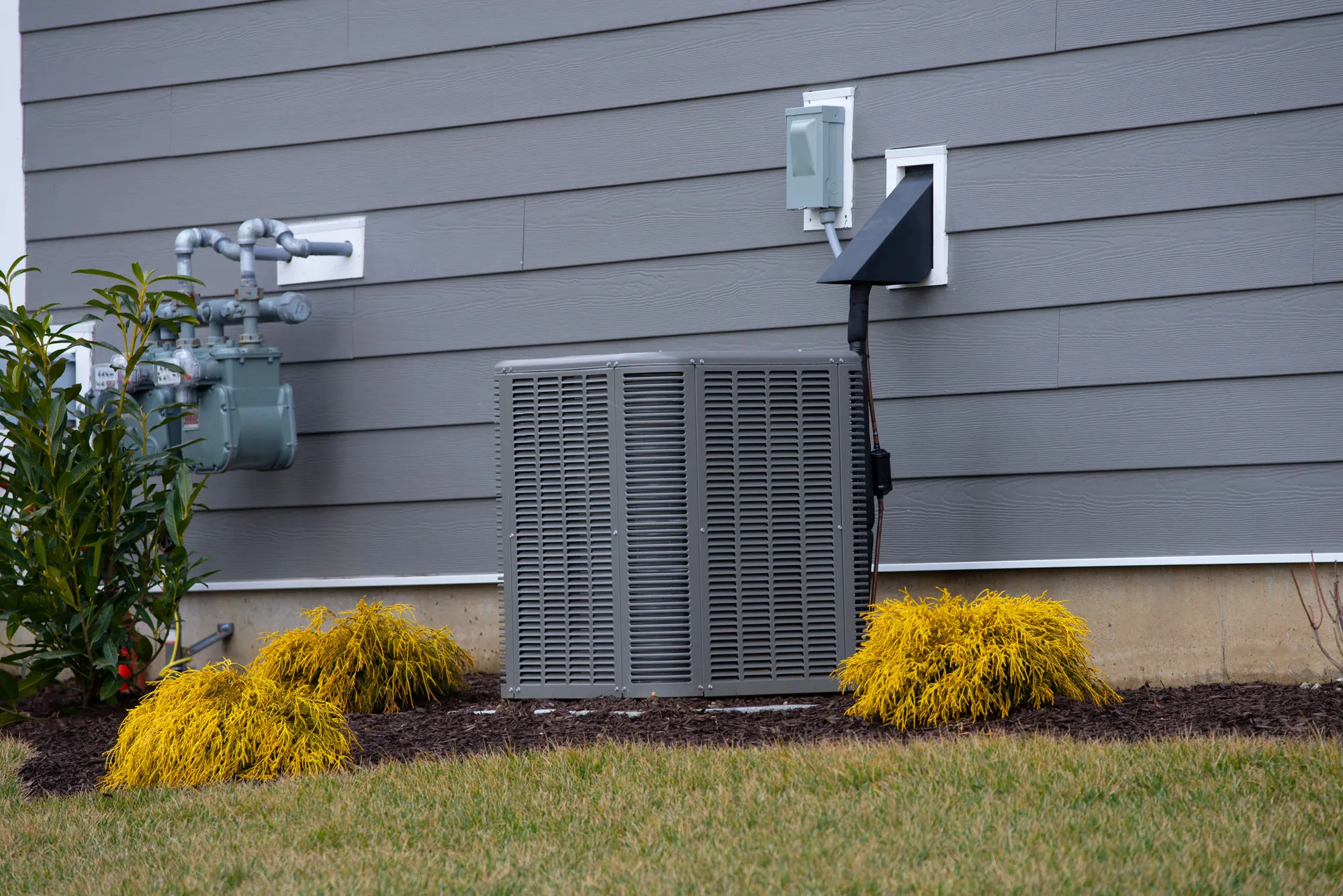
NEC 440.14 requires a disconnect within sight (under 50 feet and not blocked from view) and readily accessible. That means a weatherproof switch box mounted on the exterior wall within 3-6 feet of the condenser. HVAC techs need this to shut off power before servicing the unit. Without a disconnect, the install fails inspection.
A whip from the disconnect to the condenser
The "whip" is the short piece of flexible liquid-tight conduit that connects the disconnect box to the condenser unit's junction. Usually 3-6 feet. The whip lets the unit vibrate slightly without stressing the wiring. Some units come with a factory whip; others need one installed on site.
Indoor unit power (central systems only)
Central heat pumps have an indoor air handler that needs its own circuit. Air handlers without electric heat strips run on a 120V circuit. Air handlers with heat strips need a 240V high-amp circuit, often 50-60 amps, because electric resistance heating draws significant current when the outdoor unit can't keep up in cold weather. Mini-splits don't need this; the indoor head is powered from the outdoor unit through low-voltage control wiring.
Enough panel capacity to carry the load
A heat pump adds 20-50 amps to your panel load depending on the unit. An older 100-amp panel that was already near capacity before the heat pump often can't pass a load calculation with the new load added. In those cases, a panel upgrade to 200 amps comes first, then the heat pump circuit. Modern 200-amp panels almost always accommodate a heat pump without needing an upgrade.
How to read the heat pump's data plate
Every heat pump has a metal data plate on the outdoor unit. Two numbers tell you what circuit it needs:
- MCA (Minimum Circuit Ampacity): the minimum current the wire and breaker need to handle. Round up to the nearest standard circuit size (20, 30, 40, 50, 60 amps).
- MOP (Maximum Overcurrent Protection): the largest breaker that can protect this unit. Do NOT exceed this. Sizing the breaker too big defeats the overcurrent protection the manufacturer designed for.
Example: a 3-ton mini-split might show "MCA: 22A, MOP: 35A." That means the circuit has to handle at least 22 amps, and the breaker can't be larger than 35 amps. A 30-amp breaker with 10 AWG wire is the correct choice.
"Roman and Mike were tremendous. Pleasant, knowledgeable, hard-working and amazingly efficient. Both projects were completed quickly and at the estimated amount. Also, the original estimate was considerably less than those of competing bids. I would highly recommend Newman Electric."
Kimberly Williams, Google Review
When a panel upgrade comes first
A heat pump is additive load. If your existing panel is already carrying close to its rating with the water heater, range, dryer, and existing HVAC, adding a heat pump may push it over. NEC 220 requires a load calculation to determine whether the added load is safe on the existing service.
Rough rule of thumb for Vancouver WA homes:
- 200-amp panel, modern home: heat pump almost always fits. No upgrade needed.
- 200-amp panel, home with electric range + electric water heater + EV charger: load calc is tight. May need to shed load or upgrade one appliance to gas.
- 125-amp panel, older home: heat pump probably requires a panel upgrade first.
- 100-amp panel or fuse box: upgrade is almost always required before adding a heat pump.
The load calculation is part of every free estimate Newman Electric does for heat pump electrical work. If an upgrade is needed, the scope and price come with the estimate so there are no surprises on install day.
Rebates and tax credits to know about
- Clark Public Utilities heat pump rebates: $400-$1,200 for qualifying units.
- Cowlitz PUD incentives: similar program for residents of Longview, Kelso, Woodland, Kalama.
- Federal tax credit (IRA 25C): up to $2,000 for qualifying heat pumps installed through 2032.
- High-Efficiency Electric Home Rebate Act (HEEHRA): income-qualified rebates up to $8,000. Rolling out in Washington through the State Energy Office.
These programs change yearly. Always verify current amounts with the utility website and your tax preparer before committing.
Frequently Asked Questions
What size circuit does a heat pump need?
A 240V dedicated circuit sized to the unit's MCA/MOP rating. Mini-splits usually need 15-30 amps. Central heat pumps need 30-60 amps. Add a second circuit (50-60 amps) for air handlers with electric heat strips.
Does a heat pump need a disconnect?
Yes. NEC 440.14 requires a weatherproof disconnect within sight of the outdoor unit. Usually mounted on the exterior wall 3-6 feet from the condenser.
Can I install a heat pump on my existing panel?
Modern 200-amp panels usually accept a heat pump without upgrade. Older 100-125 amp panels often need upgrade first. A load calculation determines this before install day.
What's the electrical difference between mini-split and central heat pump?
Mini-splits need one 240V circuit. Central systems need two circuits (outdoor + indoor air handler), plus a third high-amp circuit if heat strips are included.
How much does heat pump electrical cost in Vancouver WA?
$800-$1,500 for a basic 240V circuit with disconnect. $1,500-$3,000 for central heat pump with heat strips. Add $2,000-$4,000 if a panel upgrade is needed.
Do Clark PUD or Cowlitz PUD offer rebates?
Yes. Clark PUD offers $400-$1,200 rebates for qualifying heat pumps. Cowlitz PUD has similar programs. Federal IRA tax credits add up to $2,000 more.
Related Services
Heat Pump Wiring
240V circuits, disconnects, and air handler power
Electrical Panel Upgrade
For older panels that can't support a heat pump load
Dedicated Circuits
Every heat pump needs its own circuit
EV Charger Installation
Similar 240V install process, often done together
Electrical Code Compliance
Permits and inspection done right
Signs You Need a Panel Upgrade
Pre-heat-pump panel checklist
Adding a heat pump?
Newman Electric handles the circuit, disconnect, and panel side of heat pump installs across Vancouver WA, Clark County, and Cowlitz County. We coordinate with your HVAC contractor or bring in one we trust. Estimates are free and include the load calc.