Level 1 vs Level 2 EV Charger
Which Do You Actually Need?
The short answer: Level 1 if you drive under 40 miles a day and have a free outlet near where you park. Level 2 if you drive more, have two EVs, or want a full charge overnight. Here is the breakdown.
Quick Answer
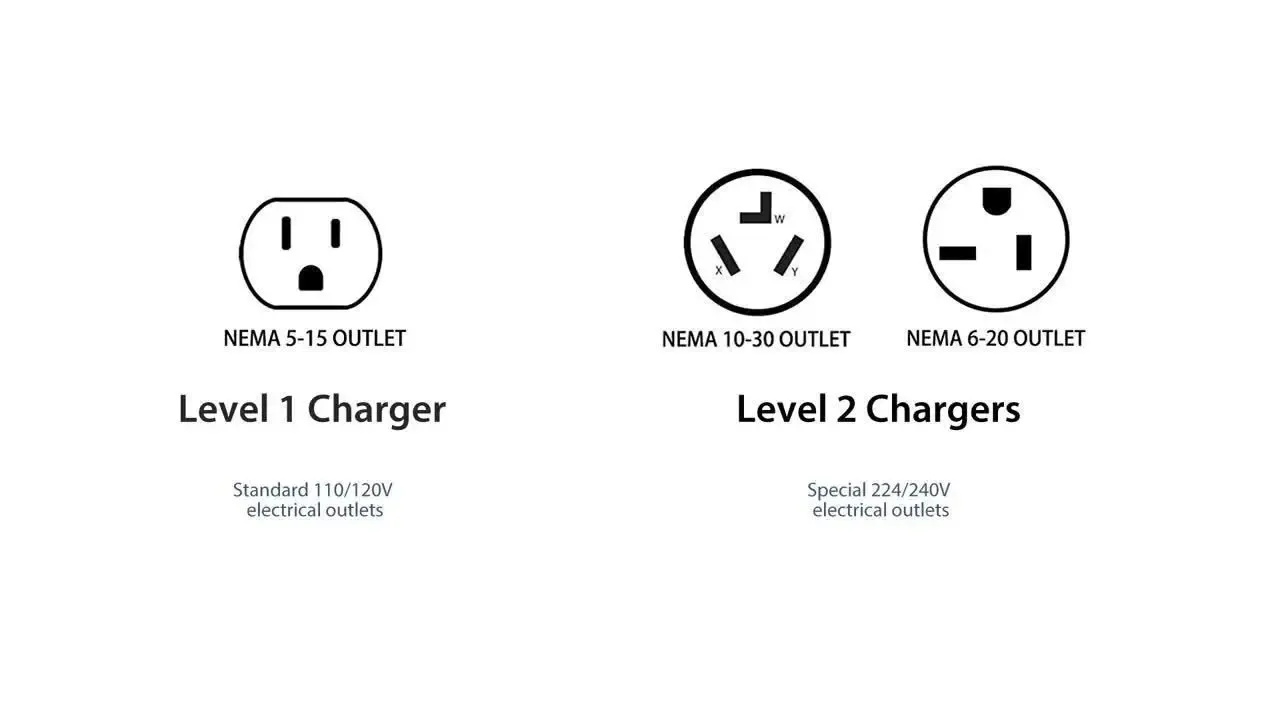
Level 1 plugs into a regular 120V household outlet and adds 3 to 5 miles of range per hour. No electrician needed. Level 2 uses a 240V circuit (same voltage as a dryer) and adds 20 to 40 miles of range per hour. It needs a licensed electrician to run a dedicated circuit from your panel. Most drivers who start on Level 1 upgrade to Level 2 within a year.
Newman Electric has installed hundreds of EV chargers across Vancouver WA, Camas, Battle Ground, and the rest of Clark and Cowlitz County. The most common call we get is from someone who bought an EV, tried to live on the Level 1 cord that came in the trunk, and realized a month in that it wasn't enough. We run the circuit, mount their charger, and they stop thinking about range entirely.
The real decision comes down to how much you drive, how many EVs you have, and how fast you need to be ready to go. Here is the difference between Level 1 and Level 2 laid out so you can figure out which one actually fits your life.
Level 1 vs Level 2 at a glance
| Feature | Level 1 | Level 2 |
|---|---|---|
| Voltage | 120V (regular outlet) | 240V (dryer/range voltage) |
| Outlet type | NEMA 5-15 (standard) | NEMA 14-50 or hardwired |
| Charging speed | 3-5 miles per hour | 20-40 miles per hour |
| Full charge time | 24-60 hours | 6-10 hours |
| Electrical work needed | None, uses an existing outlet | Dedicated 240V circuit from the panel |
| Permit required | No | Yes, L&I or Vancouver |
| Best for | Under 40 miles/day, one EV | Daily drivers, two EVs, trucks |
Level 1: the cord that came with your car
Every EV sold in the US comes with a Level 1 charging cord in the trunk. One end plugs into the car, the other into any standard 120V household outlet. No installation, no electrician, no permit. Plug it in, walk away, come back later.
The catch is speed. A typical Level 1 charger adds 3 to 5 miles of range per hour. If your EV has a 300-mile battery and it's empty, that's 60 to 100 hours to fill. Nobody actually charges from empty overnight on Level 1. What people do is plug in every night, let the car grab 30 to 50 miles while they sleep, and live off that.
Level 1 works if: you drive under 40 miles a day, have an outdoor or garage outlet on a dedicated circuit (or at least one that isn't shared with your freezer and microwave), and you're OK never doing a fast top-up at home.
Level 1 doesn't work if: you have two EVs, you own an electric truck (F-150 Lightning, Rivian R1T, Silverado EV), you regularly drive more than 40-50 miles, or you want the option to leave the house with a full battery at any time.
Level 2: the one most homeowners end up installing
Level 2 charging runs on 240 volts, the same voltage your dryer or electric oven uses. That voltage plus a higher amperage means the car can accept 6 to 12 kilowatts of power instead of the 1.4 kW a Level 1 cord delivers. The result is 20 to 40 miles of range per hour, depending on the amperage of your circuit and the car's onboard charger.
A Level 2 install means an electrician pulls wire from your panel (typically 6 AWG copper for 48-amp or 8 AWG for 40-amp), lands a double-pole 40 or 50-amp breaker, installs either a NEMA 14-50 receptacle or a hardwired EVSE, and files the permit with L&I or the City of Vancouver.
Charging speed on Level 2 depends on three things: the circuit amperage (40A, 48A, or 50A), the EVSE's output rating, and the car's onboard charger. Most mid-range EVs (Tesla Model 3, Model Y, Chevy Equinox EV, Hyundai Ioniq 5) accept 11 kW, which means a 48-amp charger gives them their fastest possible home charging speed. Electric trucks often accept 19 kW but still benefit from 48A at home.
"The install of my level 2 EV charger was seamless. The job was scoped, scheduled and completed within 1 week of my initial call to Newman. The electrician doing the installation was courteous and efficiently completed his work within his estimated time frame. He left the job site clean and the charger ready to go."
Rhadames Carmona, Google Review
How to choose between Level 1 and Level 2
Ask yourself these questions. The answers usually make the decision obvious.
How many miles do you drive per day?
Under 30: Level 1 is enough. 30 to 40: Level 1 works but barely. Over 40: Level 2. Over 80 or with a truck: Level 2 at 48 amps.
Do you have one EV or two?
Two EVs in the same garage means Level 1 won't cover both overnight. Either a 48-amp Level 2 charger with dual-vehicle scheduling, or two separate Level 2 circuits.
Is your EV a full-size truck?
Electric trucks have 130-180 kWh batteries (twice a sedan). Level 1 takes over 100 hours to fill one from empty. Level 2 at 48 amps is the minimum that makes sense for a truck.
Where do you park?
Attached garage: easy Level 2 install. Detached garage: doable but costs more because of conduit runs. Street parking: Level 2 at home isn't really an option. Driveway: depends on panel location.
What does your panel look like?
Modern 200-amp panel with open breaker space: Level 2 is straightforward. Older 100-amp panel: we do a load calculation. If it doesn't pass, a service upgrade comes first.
What a Level 2 install from Newman Electric looks like
A standard Level 2 install takes half a day to a full day depending on the distance from your panel to the garage and whether the work involves exterior conduit or a trench.
The process:
- Free on-site estimate: load calc, walk the run, confirm the charger model.
- Permit filed with L&I (most of Clark/Cowlitz) or the City of Vancouver.
- Install day: 40 or 50-amp breaker, dedicated copper run (typically 6 or 8 AWG), NEMA 14-50 outlet or hardwired EVSE.
- Inspection scheduled.
- You drive home, plug in, and stop thinking about your charging schedule.
For most permanent home setups, we recommend hardwired installs at 48 amps. For setups where flexibility to swap chargers later matters, NEMA 14-50 plug-in at 40 amps is a solid choice. Both work well depending on the goal.
Frequently Asked Questions
What's the difference between Level 1 and Level 2 EV charging?
Level 1 uses a 120V household outlet and adds 3-5 miles per hour. Level 2 uses a 240V circuit (like a dryer) and adds 20-40 miles per hour. Level 1 needs no electrician, Level 2 needs a dedicated circuit run from your panel.
Is Level 1 charging enough for daily driving?
If you drive under 40 miles a day and plug in every night, yes. If you drive more, own a truck, or have two EVs, no. Most people who try to live on Level 1 upgrade to Level 2 within a year.
How fast does a Level 2 EV charger charge?
A 40-amp Level 2 charger adds about 30 miles per hour. A 48-amp charger adds 36-40. A full overnight charge on most EVs takes 6-10 hours on Level 2.
Do I need a permit to install a Level 2 charger in Vancouver WA?
Yes. 240V dedicated circuits require a permit and inspection in Washington State. City of Vancouver has its own permit office; the rest of Clark County and all of Cowlitz County go through L&I. Newman Electric files the permit and schedules inspection as part of the job.
Does my panel have room for a Level 2 charger?
Most modern 200-amp panels in Vancouver WA can handle a Level 2 charger with room to spare. Older 100-amp panels often can't without a load calculation and possibly a service upgrade. Newman Electric checks this as part of the free estimate.
Should I get a hardwired or plug-in charger?
Plug-in (NEMA 14-50) gives you flexibility to swap chargers later. Hardwired is cleaner, more reliable for 48+ amp charging, and required for some higher-current installations. For most permanent setups we recommend hardwired at 48A. For setups where flexibility matters, plug-in at 40A is a good choice.
Related Services
EV Charger Installation
Level 2 charger installs across Clark and Cowlitz County
Choosing an EV Charger for Home
Tesla Wall Connector vs universal EVSE and more
Hardwired Level 2 Charger Install
A real Vancouver WA job, photographed start to finish
Electrical Panel Upgrade
For older homes that need capacity before adding EV load
Dedicated Circuits
The 240V circuit is the core of every Level 2 install
Electrical Code Compliance
Permits and inspections done right the first time
Ready to install a Level 2 charger?
Newman Electric installs Level 2 EV chargers across Vancouver WA, Camas, Battle Ground, Ridgefield, Longview, and the rest of Clark and Cowlitz County. We do a free estimate with a load check and tell you exactly what your install involves.