
Outlet Not Working But
the Breaker Didn't Trip?
In a service area where we handle a dead-outlet call almost every day, nine out of ten have the same cause. Here is how to check it in two minutes before you call anyone.
Quick Answer
The most common reason an outlet dies without a tripped breaker is a tripped GFCI somewhere else in the house. Walk your kitchen, bathrooms, garage, laundry room, and outdoor outlets, and press "reset" on every GFCI you see. That fixes about 60% of dead-outlet calls. If that doesn't work, check for a wall switch that controls the outlet (half-hot), then suspect a loose wire connection or a failed outlet, which need an electrician.
Dead-outlet calls come in constantly at Newman Electric across Vancouver WA, Clark County, and Cowlitz County. The pattern is almost always the same. A homeowner's kitchen outlet stopped working, they check the panel, no tripped breaker. They assume the outlet is broken. Nine times out of ten it's the GFCI in the bathroom on the other side of the house.
Before you call anyone, run through these five checks in order. The first two are free and take a couple of minutes. If those don't solve it, you need an electrician to open up the circuit.
Step 1: Find every GFCI in your house and reset it
GFCI outlets protect themselves and every outlet downstream of them on the same circuit. When a GFCI senses a ground fault (even a small one, like a little moisture), it trips and cuts power to itself plus every outlet it feeds. The dead outlet you are looking at may be protected by a GFCI in a completely different room.
Code (NEC 210.8) requires GFCIs in these locations, so start there:
- Kitchen (counters and island)
- Bathrooms
- Garage and detached shop
- Outdoor receptacles
- Laundry room (required on newer installs)
- Unfinished basements and crawlspaces
- Pool, spa, and hot tub areas
Press "reset" on every GFCI you can find. If you hear a click and the button stays in, you had a tripped GFCI. Go back to the dead outlet and test it with a lamp or a plug-in tester.
Step 2: Check for a wall switch that controls the outlet
In older homes, it is common for a wall switch to control one half of a living room outlet, so you could turn a floor lamp on and off from the door. That outlet looks normal but only half of it is always hot. Flip every switch in the room where the dead outlet is and see if it wakes up.
If half of the outlet works and half doesn't, you have a half-hot outlet and the switched half is controlled by a wall switch. Not a problem. Not a repair call. Just how the outlet was wired.
Step 3: Double-check the breaker
Some breakers trip to a middle position that looks like they are still on. Push every breaker firmly to the OFF position, then back to ON. If you find one that resists or clicks, it was partially tripped.
This is especially common with older breakers and AFCI breakers, which have a trip position that is not always obvious from a quick glance at the panel.
"Came home at 3pm on a Thursday to discover I had some confounding sort of electrical issue. I couldn't figure it out and called Newman at 3:35. By 4:30 they were leaving having diagnosed the issue and replaced two breakers and GFCI outlets. There was an emergency extra fee for immediate response but they were very up front about it and did awesome work. A+ job."
Julio Arciniega, Google Review
Step 4: Loose back-stab connections (needs an electrician)
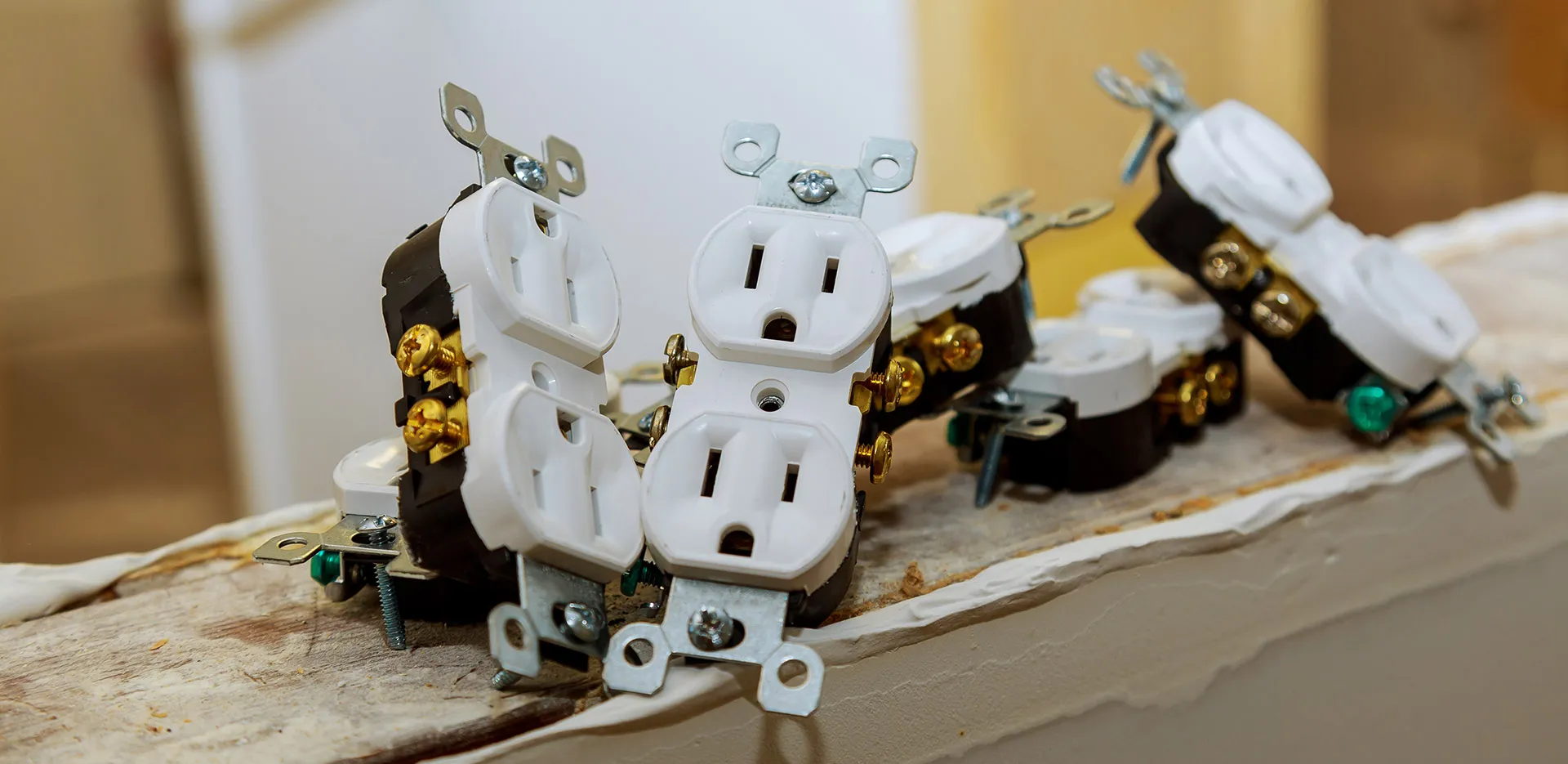
A back-stab connection is when a wire is pushed into a spring-loaded hole on the back of an outlet rather than wrapped around a terminal screw. Builder-grade outlets in homes built between the 1970s and today have often been installed this way because it's faster.
The spring loses tension over time. The wire loses contact. The outlet goes dead without tripping a breaker. Worse, the failing connection often arcs and heats up before it loses contact entirely, which is how an outlet goes dead and smells burnt at the same time.
The fix is pulling the outlet out, cutting the bent tip off each conductor, and landing the wires under the terminal screws at 12-14 in-lbs of torque. Newman Electric does this on call-outs in Vancouver WA, Camas, Battle Ground, and the rest of Clark and Cowlitz County.
Step 5: Failed outlet or a bad junction box splice
Outlets themselves fail. The contacts inside the receptacle wear out, a prong breaks, or a poorly made outlet never had good contact to start. Modern "spec-grade" commercial outlets hold up longer than the cheap residential ones.
A failed wire nut in a junction box somewhere else on the circuit can also kill power to a downstream outlet. These splices are usually hidden in the wall or the attic and not easy to track down without a tone generator, a voltage tester, and some patience. A licensed electrician can trace the circuit backward from the dead outlet to find the break.
Should you replace the outlet yourself?
Homeowners in Washington State are allowed to work on their own single-family residence, but anything more than a simple device swap still needs a permit and inspection under WAC 296-46B. Even on a straightforward replacement, if you mix up hot and neutral, underdrive the terminal screws, or miss a damaged conductor, you can create a fire or shock hazard that the next electrician has to clean up.
The honest answer: if you have a multimeter, know how to kill the circuit safely, and have done it before, a straight outlet swap is fine. If you are unsure what you are looking at when you pull the outlet out, call an electrician.
Frequently Asked Questions
Why is my outlet dead but the breaker isn't tripped?
Usually a tripped GFCI somewhere else in the house cuts power to the dead outlet downstream of it. Reset every GFCI in kitchens, bathrooms, garages, laundry, and outdoors. If that doesn't work, check for a wall switch controlling a half-hot outlet, then suspect wiring issues that need an electrician.
How do I find the GFCI that controls the dead outlet?
Check every GFCI in the house. It is often in a different room than the dead outlet. Kitchens, bathrooms, garages, laundry, basements, and outdoor receptacles are the most likely spots. Press "reset" on all of them.
What is a half-hot outlet?
An outlet where one receptacle is always live and the other is controlled by a wall switch. Common in older living rooms and bedrooms for switched lamp control. If half of the outlet works and half doesn't, flip the wall switches to find the one controlling it.
Can a loose wire cause an outlet to stop working?
Yes. Back-stab connections at the back of an outlet fail over time. A loose terminal screw or a failed wire nut in a junction box does the same. The outlet goes dead without a tripped breaker. An electrician opens the outlet, checks the connections, and lands the wires properly.
Should I replace a dead outlet myself?
Only if you know how to test voltage at the box and identify each wire. Washington State allows homeowners to work on their own single-family home, but permits and inspections still apply under WAC 296-46B for anything beyond a simple swap. Most people are better off having a licensed electrician do it right.
How much does it cost to fix a dead outlet in Vancouver WA?
A direct outlet replacement runs $150 to $300 in the Vancouver WA area. If diagnosing reveals a loose connection elsewhere on the circuit or burned wiring, the cost increases. Newman Electric gives free estimates before starting work.
Related Services
Outlet Installation
New outlets, GFCI upgrades, and proper replacements
Electrical Repair
Diagnostic calls for dead outlets and weird circuit behavior
GFCI vs AFCI Outlets
What each one does and where code requires them
Dedicated Circuits
For high-draw appliances that keep killing shared circuits
Electrical Safety Inspection
Full-home evaluation to find loose connections before they fail
Why Does My Breaker Keep Tripping?
For the opposite problem: breakers that trip too often
Tried the GFCI and still dead?
Newman Electric diagnoses dead outlets across Vancouver WA, Camas, Battle Ground, Longview, and the rest of Clark and Cowlitz County. Our crew opens the circuit, finds the break, and fixes it without surprise pricing. Estimates are free.