Is Whole House Surge Protection
Worth It?
Short answer: yes. The longer answer involves understanding where surges actually come from and what they do to your home over time.
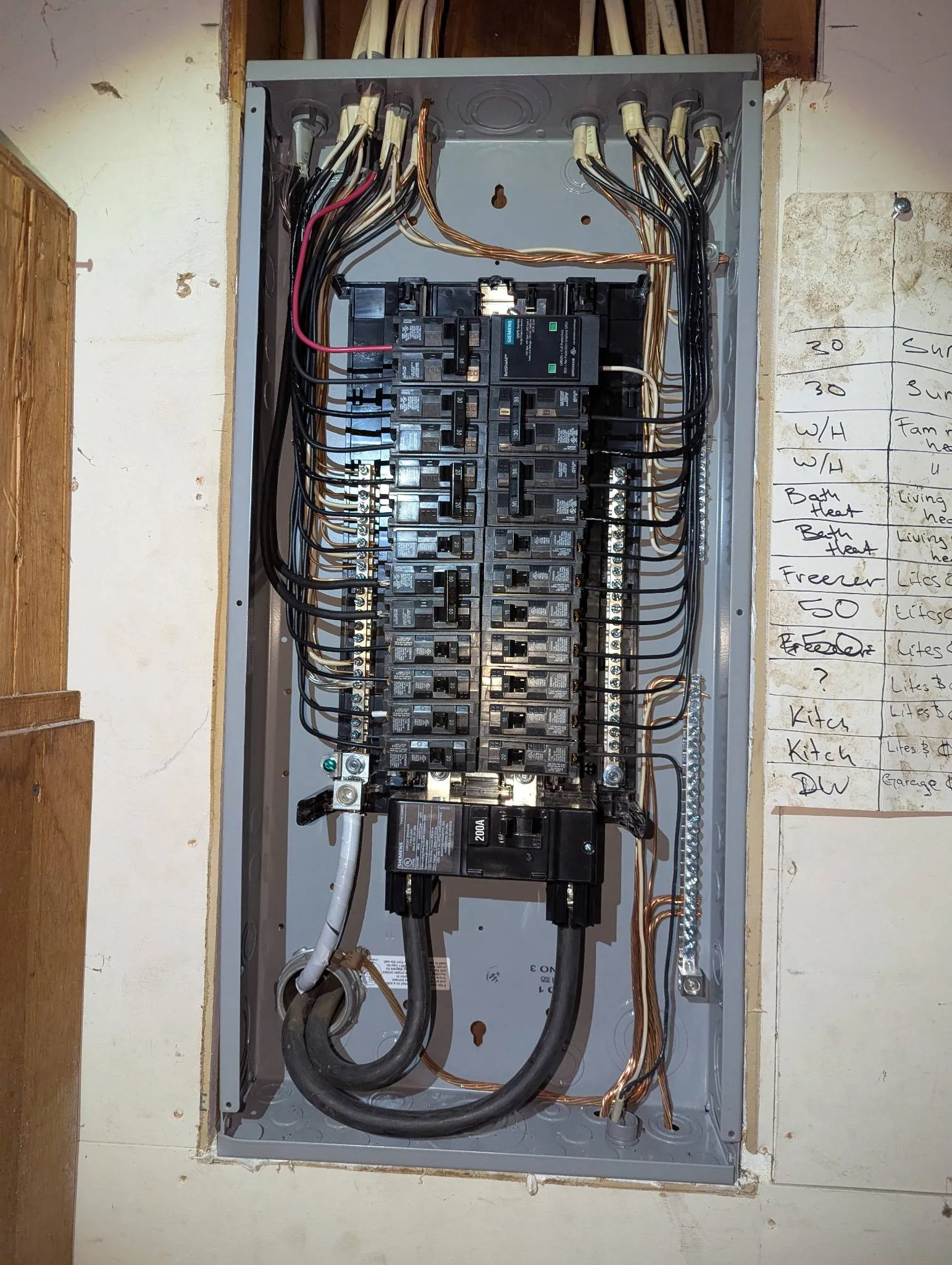
Most people think of surge protectors as the power strips they buy at the hardware store. Those help, but they're the second line of defense. A whole-house surge protector installs directly at your electrical panel and catches surges before they reach anything in your home.
Ryan Newman, owner of Newman Electric in Vancouver, WA, installs these regularly and recommends them on almost every panel upgrade. "It's $300 to $600 installed. Your fridge costs $2,000. Your HVAC system costs $8,000. Your TV, computers, washer, dryer, all of it has circuit boards now. One bad surge and you're replacing appliances that cost 10 or 20 times what the protector cost."
Where power surges actually come from
Lightning gets all the credit, but it causes a small percentage of the surges that damage equipment. The real sources are more mundane and more frequent.
Internal surges from inside your home
Every time a motor kicks on or off (AC compressor, refrigerator, furnace blower, well pump), it creates a small surge on the circuit. These happen dozens of times a day. Each one is minor, but over months and years they degrade the electronics in your appliances. Your dishwasher's control board, your dryer's logic board, your garage door opener's circuit board. They all die a little bit with every surge.
External surges from the utility grid
When Clark PUD switches transformers, when a tree branch hits a power line, when a car takes out a pole down the road, the resulting voltage spike travels through the grid and into your panel. These are bigger than internal surges and more likely to cause immediate, obvious damage.
Lightning (nearby, not direct strikes)
A direct lightning strike to your home overwhelms any consumer-grade protection. But a nearby strike, even a mile or two away, sends a surge through the power lines that a whole-house protector can handle. Clark County gets more thunderstorms than Portland does, so this matters more here than people think.
What a whole-house surge protector actually does
A whole-house SPD (surge protective device) mounts at your breaker panel and connects to both legs of your 240-volt service. When voltage on the line exceeds a set threshold (usually around 150 to 170 volts on a 120-volt circuit), the device diverts the excess energy to the ground system. This happens in nanoseconds, before the surge reaches your branch circuits.
The device absorbs the excess energy using components called MOVs (metal oxide varistors). Each surge degrades them slightly. Eventually, after absorbing enough cumulative energy, the MOVs wear out and the device needs replacement. Quality units have an indicator light that tells you when protection has been depleted.
The industry rates surge protectors in kA (kiloamps). For residential use, Newman Electric recommends a minimum of 50kA. A 50kA to 100kA unit covers the vast majority of surge events a home in the Vancouver WA area will experience.
The math
Surge protector cost
$300 - $600
Installed at the panel. Lasts 3 to 5 years. Replacement device is about $100 to $200 (labor to swap it is minimal).
Cost of surge damage
- Refrigerator control board: $200 - $500
- HVAC control board: $300 - $800
- Garage door opener: $200 - $400
- TV / home theater: $500 - $3,000+
- Computer / home office: $1,000 - $3,000+
- Washer/dryer electronics: $200 - $600
One surge event that takes out your fridge and HVAC board costs more than a decade of surge protection. The math is straightforward.
"Great service with amazing pricing. Installed a 240v outlet 40 amp ckt next to panel my panel and added a 50ka surge protector. Permit included in job cost. Same day installation. Continue the great work!"
Newman Electric Customer, Google Review
Whole house vs point-of-use: you want both
A whole-house SPD stops the big stuff at the front door. External surges from the utility grid, nearby lightning, and large internal surges from your HVAC system. It protects everything connected to your panel, including appliances that you'd never think to plug into a power strip (your oven, water heater, furnace, etc.).
Point-of-use surge protectors (the good ones rated for actual surge protection, not just $8 power strips) add a second layer at the outlet. They handle smaller surges that the panel-level device may let through, and they protect against surges that enter through cable or phone lines.
Ryan recommends a whole-house SPD at the panel for every home, plus point-of-use protection on your computer, home theater, and networking equipment. That two-layer approach covers both ends of the problem.
Best time to add surge protection
You can add a whole-house surge protector to any panel at any time. But some situations make the timing especially convenient:
During a panel upgrade. The panel is already open and the electrician is already there. Adding an SPD at this point is quick and cheap.
When installing an EV charger. A 40-amp EV charger adds a large cycling load to your system. An SPD protects both the charger and everything else on the panel.
When installing a generator. Power restoration after an outage often causes a surge. An SPD ensures your electronics are safe when the utility comes back online.
After replacing an expensive appliance. If you just spent $3,000 on a smart fridge, protecting it with a $400 surge protector is a no-brainer.
"Ryan, was responsive & great followup. We added in a surge protector to our home & issues resolved. Great service!"
Liliana Andrade, Google Review
Frequently Asked Questions
How much does whole house surge protection cost?
A whole-house surge protector installed at the panel costs $300 to $600 in the Vancouver WA area, including the device and labor. Higher-rated units (80kA to 100kA) cost more but offer better protection. Newman Electric includes a permit when required and can usually install it in under an hour.
Does a whole house surge protector replace power strips?
Not entirely. The panel-level device stops large surges from entering your home. Quality point-of-use surge protectors add a second layer for sensitive electronics and can also protect against surges entering through cable or phone lines. The best approach is both: whole-house at the panel plus point-of-use strips on your most valuable electronics.
How long does a surge protector last?
Most whole-house surge protectors last 3 to 5 years depending on how many surges they absorb. Every surge degrades the internal MOV components slightly. Quality units have indicator lights that show when protection has been depleted. Check the light annually and replace the unit when the protection indicator goes off.
Will a surge protector stop a lightning strike?
A direct lightning strike delivers too much energy for any consumer surge protector. But direct strikes to homes are rare. What's common is a nearby strike sending a surge through the power lines, and a whole-house SPD handles that effectively. The majority of damaging surges come from the utility grid and internal loads, not from lightning.
Related Services
Surge Protection
Full service page with pricing and installation details
Electrical Panel Upgrade
Add surge protection during your panel upgrade
EV Charger Installation
Protect your EV charger with panel-level surge protection
Generator Installation
Surge protection pairs perfectly with backup power
Smart Home Wiring
Smart devices are especially vulnerable to surges
Dedicated Circuits
Isolate high-draw appliances on their own circuits
Ready to protect your home from surges?
Newman Electric installs whole-house surge protectors across Vancouver WA, Clark County, and Cowlitz County. Usually takes under an hour. Call for a free estimate.