
Aluminum Wiring in Your Home:
Signs, Risks, and What to Do
If your home was built between 1965 and 1973, there's a real chance it has aluminum branch wiring. That's worth knowing about.
During a copper shortage in the mid-1960s, builders across the country switched to aluminum for residential branch circuit wiring. It was cheaper, widely available, and code-approved. By the early 1970s, enough houses had burned that the industry realized aluminum behaved differently than copper at connection points. The switch back to copper happened by 1974, but thousands of homes still have the original aluminum wiring in their walls.
Ryan Newman, owner of Newman Electric in Vancouver, WA, sees aluminum wiring regularly in the older neighborhoods around the area. "There are a lot of homes from that era in east Vancouver, Hazel Dell, and Orchards. Most homeowners don't know they have it until they try to get insurance or we open up a junction box during a remodel."
How to tell if your home has aluminum wiring
There are a few ways to check without hiring an electrician, though a professional inspection is always the safest route.
Check the cable markings
Look at the wiring in your attic, basement, or crawl space. The outer sheathing on aluminum wiring will say "AL" or "Aluminum" printed on the jacket. Copper-wired homes won't have this marking.
Look at the wire color
With the power off, remove an outlet cover plate and look at the wires connected to the outlet. Aluminum wiring is dull silver. Copper wiring is orange, brown, or dark when oxidized. If you see silver wires going to the screw terminals, that's aluminum.
Check your home's build year
Aluminum branch wiring was used primarily from 1965 to 1973. If your home was built in that window, there's a strong chance it has aluminum wiring on some or all circuits. The Clark County Assessor's website shows the build year for any property.
Have an electrician inspect
If you're not comfortable pulling outlet covers, call for an inspection. Newman Electric can check every connection point in the house and tell you exactly what you're dealing with. The inspection is free as part of an estimate.
Why aluminum wiring is a fire risk
Aluminum wire itself isn't dangerous. The problem is what happens where aluminum meets copper or brass, which is at every outlet, switch, junction box, and breaker in your home.
Aluminum expands and contracts more than copper when it heats up and cools down. Over decades of use, this thermal cycling loosens the connections. A loose connection generates heat. Heat accelerates oxidation. Oxidation increases resistance. More resistance means more heat. Eventually, the connection gets hot enough to ignite the surrounding materials.
The U.S. Consumer Product Safety Commission (CPSC) found that homes with aluminum wiring are 55 times more likely to have fire-hazard conditions at outlets and switches compared to homes with copper wiring. That statistic alone is why insurance companies pay attention to it.
Warning signs that connections are failing
Warm or discolored outlet covers
A faceplate that's warm to the touch or has brown/yellow discoloration means the connection behind it is overheating.
Flickering lights not tied to a specific appliance
Random flickering across multiple fixtures can indicate loose aluminum connections at the panel or junction boxes.
Outlets that don't hold a plug firmly
Thermal cycling can deform the outlet's internal contacts. If plugs fall out or feel loose, the outlet needs replacement.
Burning smell near outlets or switches
An acrid, melting-plastic smell means something is overheating. Turn off the breaker and call an electrician immediately.
Intermittent power loss to outlets
An outlet that works sometimes and doesn't other times points to a loose or degraded connection.
Breakers tripping without an obvious overload
Arcing at a loose aluminum connection can trip AFCI breakers or cause enough heat to trip thermal breakers.
"Ryan and the team were very helpful. They were punctual and got after the work quickly. I purchased an older home that needed to be updated and rewired. Ryan and Garrett worked out a schedule and were able to get all the work done in a few days time. They were open and answered all questions throughout the process. They also worked with my schedule."
Stafford Strong, Google Review
Your options for fixing aluminum wiring
There are three approaches, and the right one depends on your budget, your home's condition, and whether you're planning a remodel anyway.
Full copper rewire
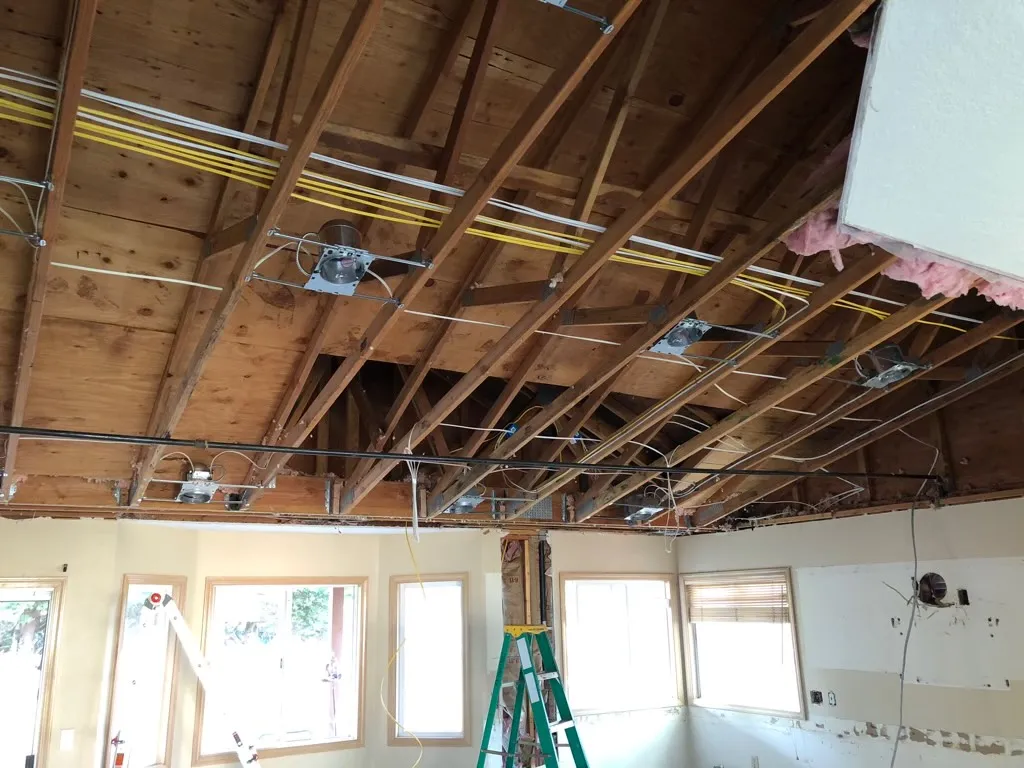
Remove all aluminum branch wiring and replace it with copper. This is the permanent solution and the only one that completely eliminates the hazard. Cost runs $8,000 to $20,000+ depending on home size and wall access. Makes the most sense during a major remodel when walls are already open.
COPALUM connectors
A special crimp connector that permanently bonds aluminum to copper pigtails at every connection point. The CPSC considers this a permanent repair. Requires a specialized tool that only certified electricians have. Runs $50 to $80 per connection, and a typical home has 30 to 60 connections. Total cost usually lands between $2,000 and $5,000.
AlumiConn connectors
A set-screw lug connector that joins aluminum to copper pigtails. Easier to install than COPALUM and accepted by most insurance companies. Runs $30 to $60 per connection. The total is lower, but these connectors require periodic retorquing to maintain a tight connection. Still a significant safety improvement over bare aluminum-to-copper connections.
Ryan's recommendation at Newman Electric: if you're doing a remodel or buying a home with aluminum wiring, rewire it completely. If a full rewire isn't in the budget right now, COPALUM connectors at every connection point get you to a safe place. Either way, don't just leave it alone and hope for the best.
Insurance and aluminum wiring
Most homeowners insurance companies in Washington State will still insure a home with aluminum wiring, but many charge a higher premium or require an inspection report showing the connections have been remediated. Some companies will decline coverage entirely until the wiring is addressed.
If you're buying a home with aluminum wiring, the home inspector will flag it. That gives you leverage to negotiate the repair cost into the sale price. If you're selling, having the remediation done and documented before listing removes a major objection. Newman Electric provides detailed documentation of all connection remediation work for insurance and real estate purposes.
Frequently Asked Questions
How do I know if my house has aluminum wiring?
Check the cable sheathing in your attic or basement for "AL" or "Aluminum" markings. Or, with the power off, remove an outlet cover and look at the wire color. Silver means aluminum, orange/brown means copper. Homes built between 1965 and 1973 are the primary concern. Newman Electric can confirm during a free inspection.
Is aluminum wiring illegal?
No. Aluminum wiring is not illegal and doesn't violate current Washington State code. But it is a known fire hazard at connection points, and most insurance companies either increase premiums or require remediation. The CPSC recommends addressing it even though code doesn't mandate removal.
How much does it cost to fix aluminum wiring?
Connector remediation (COPALUM or AlumiConn at every connection point) runs $2,000 to $5,000 for a typical home. A full copper rewire costs $8,000 to $20,000+ depending on home size and wall access. Newman Electric provides free estimates and can recommend the right approach for your budget and situation.
Will my homeowners insurance cover aluminum wiring?
Most insurers in Washington will still cover homes with aluminum wiring, but many charge higher premiums or require an inspection showing connections have been remediated. Some may decline coverage until the work is done. Having remediation documented by a licensed electrician usually satisfies their requirements.
Can I just replace the outlets instead of rewiring?
Replacing outlets with CO/ALR-rated devices helps, but it doesn't fix the underlying connection issue. The best non-rewire solution is having a licensed electrician install COPALUM or AlumiConn connectors at every junction point. This creates a safe copper-to-aluminum transition that addresses the root cause.
Related Services
Aluminum Wiring Replacement
Full service page with pricing, connector options, and process
Whole House Rewiring
Complete copper rewire for homes with outdated wiring
Electrical Panel Upgrade
Often paired with rewiring for older homes
Electrical Safety Inspection
Identify aluminum wiring and other hazards
Electrical Fire Prevention
Address the wiring issues that lead to fires
Remodel Electrician
Rewire aluminum during your next remodel
Think your home might have aluminum wiring?
Newman Electric inspects aluminum wiring connections across Vancouver WA, Clark County, and Cowlitz County. Ryan will tell you exactly what you have, what condition it's in, and your best options. No charge for the estimate.